Buying Property from Land-Share Construction Projects in Turkey: Contract (APKİS) Termination and Advance Title Deed Risks
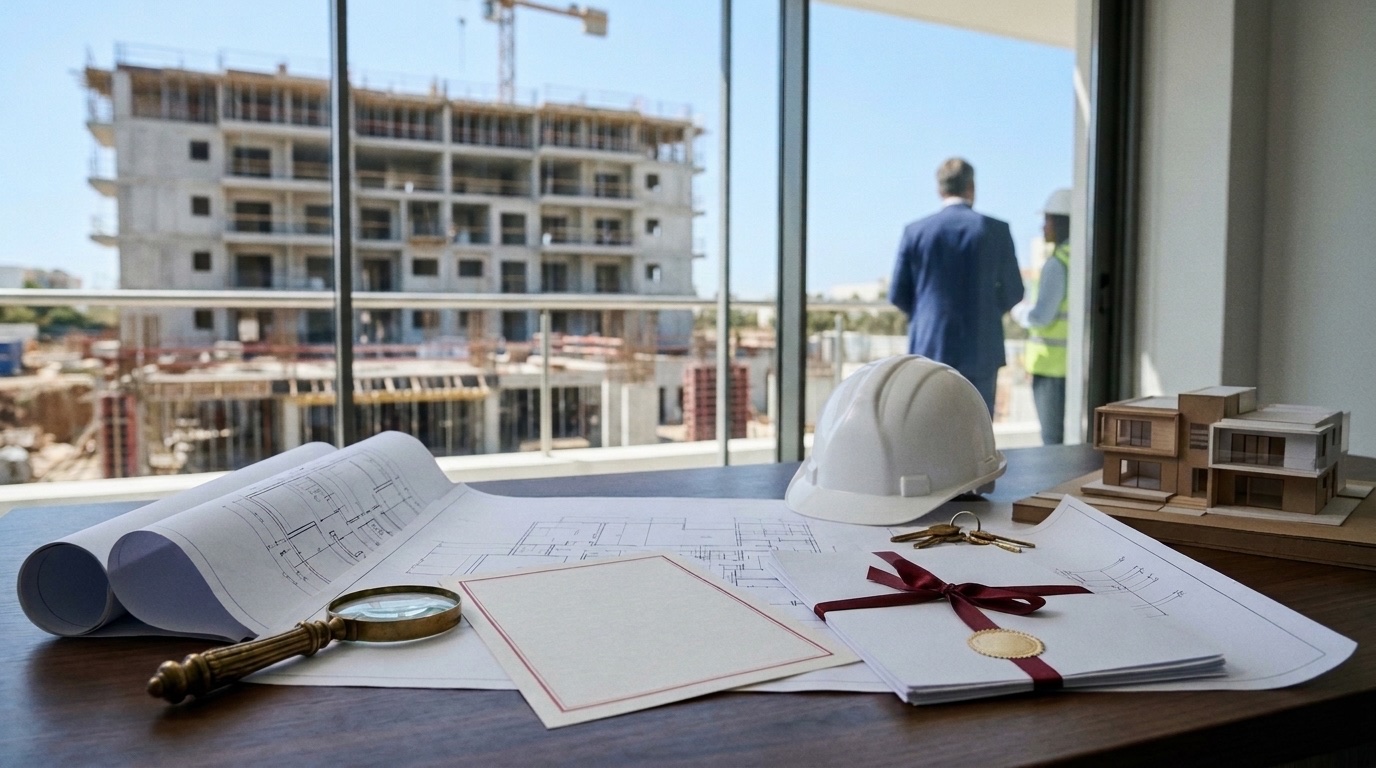
Buying Property from Land-Share Construction Projects in Turkey: Contract (APKİS) Termination and Advance Title Deed Risks
In the vast majority of new residential and coastal resort developments in Turkey, the land on which the developer builds does not belong to the construction company itself, but rather to third-party landowners (arsa sahipleri). Under Turkish market practice, the developer executes a notarized Land-Share Construction Agreement (Arsa Payı Karşılığı İnşaat Sözleşmesi — APKİS / Kat Karşılığı İnşaat Sözleşmesi) with the landowners, undertaking to construct and deliver the building on a turnkey basis in exchange for the right to acquire designated independent units (apartments or commercial units). Foreign and domestic buyers typically purchase their apartments from the developer either by signing a written purchase agreement at the sales office or by receiving an early construction servitude title deed while the project is still under construction.
However, when purchasing from a land-share project, the buyer's ownership security depends not only on their contract with the developer, but fundamentally on whether the master construction contract between the developer and the landowner remains intact. Pursuant to the Turkish Code of Obligations (TCO No. 6098, Arts. 183, 188, and 470 et seq.), the Turkish Civil Code (TCC No. 4721, Arts. 706 and 1023), and established precedents of the Turkish Court of Cassation (Yargıtay), if the developer abandons the construction or defaults before reaching the critical completion threshold and the landowner terminates the master agreement retroactively (ex tunc), even official "Advance Title Deeds" (Avans Tapu) already registered in the names of third-party buyers can be cancelled by court order and reverted to the landowner.
Executive Legal Summary (Key Takeaways):
- Assignment of Claim & Landowner's Plea of Non-Performance (TCO Arts. 183 & 188): A developer's sale of an apartment allocated to them under a land-share contract legally constitutes a "Written Assignment of Claim" (Alacağın Temliki). Under TCO Art. 188, if the developer fails to fulfill its construction obligations, the landowner can assert the defense of non-performance directly against the third-party buyer.
- No Good-Faith Title Protection for "Advance Title Deeds" (TCC Art. 1023 Exception): Construction servitude title deeds transferred before project completion to help the developer finance construction are classified by the Court of Cassation as "Advance Title Deeds" (Avans Tapu). Because a buyer acquiring a unit in an unfinished building is deemed to know of the underlying land-share contract, TCC Art. 1023 bona fide third-party protection does not apply.
- The 90% Completion Threshold & Retroactive Termination (Ex Tunc): If physical construction progress across the project is below 90% when the developer defaults, the landowner may obtain retroactive (ex tunc) termination, resulting in judicial cancellation of the buyers' advance title deeds.
- Prospective Termination (Ex Nunc) & Substituted Performance (TCO Art. 113): If construction is 90% or more complete, only prospective termination applies; furthermore, buyers can petition the court for "Authorization for Substituted Performance" (Nama İfaya İzin — TCO Art. 113) to complete the remaining works themselves and secure their title deeds.
1. Legal Nature of Land-Share Construction Contracts (Kat Karşılığı İnşaat Sözleşmesi)
Pursuant to Articles 470 et seq. of the Turkish Code of Obligations (Law No. 6098) and Article 706 of the Turkish Civil Code (Law No. 4721), a Land-Share Construction Contract is a hybrid double-type agreement combining a construction work contract with a preliminary real estate conveyance agreement.
This legal structure creates a tripartite relationship governed by strict statutory rules:
- The Master Contract Between Landowner and Developer: The landowner undertakes to transfer specific land shares to the developer, while the developer undertakes to finance, construct, and deliver the entire building (including the landowner's allocated units and the municipal Occupancy Permit / İskan) in accordance with the approved architectural project. Because it involves real property conveyance, this master contract is only valid if executed in official deed form before a Turkish Notary Public.
- The Sub-Sale Contract Between Developer and Buyer: To finance the construction, the developer sells the independent units allocated to the contractor's share to third-party investors during the off-plan or construction stages.
- Conditional Accrual of Ownership: Under Turkish construction law, the developer does not earn unconditional title to its allocated apartments until it fulfills its construction obligations toward the landowner. Consequently, any right transferred by the developer to a third-party buyer remains legally subordinate to the developer's performance of the master contract.
2. Legal Status of the Apartment Buyer: "Assignment of Claim" (TCO Art. 183) and Defense Risks (TCO Art. 188)
Under the Unification of Judgments Decision of the Court of Cassation (30.09.1988, Docket No. 1987/2, Decision No. 1988/2), a contract whereby a developer sells an apartment allocated to it under a land-share construction project constitutes an "Assignment of Claim" (Alacağın Temliki) under TCO Article 183.
Whether the foreign or domestic buyer signs an ordinary written contract at the developer's sales office or a notarized preliminary sales contract, the transaction transfers the developer's personal claim to demand title registration against the landowner:
- Validity of Ordinary Written Contracts (TCO Art. 184): Because Article 184 of the Turkish Code of Obligations requires only ordinary written form for the validity of an assignment of claim, a properly drafted written contract signed at the developer's office is legally binding and grants the buyer standing to file a Forced Title Registration Lawsuit (Cebri Tescil Davası) once construction obligations are met.
- The Landowner's Defense Right Against the Buyer (TCO Art. 188/1): Pursuant to Article 188/1 of the Turkish Code of Obligations, the debtor (the landowner) may assert against the assignee (the apartment buyer) all defenses that the landowner had against the assignor (the developer) at the time the assignment became known.
- Practical Consequence: Even if the buyer has paid 100% of the purchase price in cash to the developer, if the developer breaches the master contract or abandons the construction site, the landowner can invoke TCO Art. 97 and Art. 188 to lawfully refuse title transfer to the buyer.
3. The "Advance Title Deed" (Avans Tapu) Trap and Why TCC Art. 1023 Good-Faith Protection Fails
According to settled precedents of the Court of Cassation General Assembly of Civil Chambers and the 6th Civil Chamber (formerly 15th Civil Chamber), title deeds transferred before construction milestones are fulfilled constitute conditional "Advance Title Deeds" (Avans Tapu) and are not protected by the bona fide acquisition rule of TCC Article 1023.
One of the most dangerous misconceptions among foreign property buyers in Turkey involves early title deeds. Often, landowners transfer construction servitude title deeds (Kat İrtifakı Tapusu) for the developer's units at the beginning of construction so the developer can sell them to raise capital. When a foreign investor receives an official red/blue Title Deed (Tapu) at the Land Registry Directorate bearing their own name, they naturally assume their ownership is absolute and protected by Article 1023 of the Turkish Civil Code (which protects third parties who acquire title in good faith relying on the Land Register).
However, the Turkish Court of Cassation strictly rejects this defense in land-share projects for three legal reasons:
- Conditional Preliminary Conveyance (Avans Tapu): Any title deed transferred by the landowner to the developer (or directly to the developer's buyer) prior to the completion of construction is legally classified as an "Advance Title Deed"—an advance payment given on the condition precedent that the developer completes the building.
- Constructive Knowledge & Duty of Care (TCC Art. 2 & Art. 1023/2): Under Court of Cassation jurisprudence, anyone purchasing an independent unit in a building that is visibly still under construction is legally presumed to know—or by exercising reasonable care should have known—that the developer holds the right conditionally under a land-share construction agreement. Therefore, the buyer cannot claim bona fide ignorance under TCC Art. 1023.
- Conversion into Corrupt Registration (Yolsuz Tescil — TCC Art. 1024): If the developer defaults and the landowner obtains retroactive termination of the master contract, the legal cause supporting the advance title deed collapses, rendering the buyer's title a corrupt registration (yolsuz tescil) subject to judicial cancellation.
4. Retroactive (Ex Tunc) vs. Prospective (Ex Nunc) Termination and the 90% Threshold
Under the Court of Cassation Unification of Judgments Decision dated 25.01.1984 (1983/3 E., 1984/1 K.), whether a landowner's termination of a land-share construction contract operates retroactively or prospectively depends primarily on whether physical construction has reached the 90% completion threshold.
When a developer goes bankrupt, abandons the project, or fails to complete construction within the contractual deadline, Turkish courts distinguish between two legal regimes:
A) Retroactive Termination (Ex Tunc — Construction Below 90%)
If the overall physical completion rate of the construction project (verified by court-appointed civil engineering experts) is below 90%, the landowner is entitled to demand retroactive (ex tunc) termination of the construction contract.
- Severe Impact on Buyers: Upon a final judgment of retroactive termination, the contract is voided ab initio. The landowner files a Title Cancellation and Registration Lawsuit (Tapu İptal ve Tescil Davası) against all third-party buyers holding advance title deeds. The court cancels the buyers' title deeds and reverts ownership to the landowner. Buyers cannot claim compensation from the landowner and are left only with a personal claim for damages against the (often insolvent) developer.
B) Prospective Termination (Ex Nunc — Construction at 90% or Above) & Substituted Performance (TCO Art. 113)
If the physical completion of the project has reached 90% or more, Turkish courts refuse retroactive termination under the principle of good faith (TCC Art. 2) and allow only prospective (ex nunc) termination.
- Buyers' Legal Remedy — Substituted Performance (Nama İfaya İzin — TCO Art. 113): Where construction is substantially complete or the developer abandons the project in its final stages, apartment buyers can unite and file a lawsuit under TCO Article 113 requesting Authorization for Substituted Performance (Nama İfaya İzin). With court authorization, the buyers form a committee to finance and complete the remaining construction defects (including the landowner's units and the İskan permit) at the developer's expense, thereby legally preserving and registering their title deeds.
5. Comparison Table of Contract and Title Deed Risks in Land-Share Projects
| Acquisition Type & Project Status (Legal Basis) | Title Status Upon Landowner Termination | Buyer Protection & Legal Risk Level |
|---|---|---|
| Advance Servitude Title Deed (Progress <90%) | ❌ Title deed cancelled upon ex tunc termination | ❌ TCC Art. 1023 good-faith defense rejected |
| Milestone-Earned Title Deed (Master Contract) | ✅ Title preserved if milestone was earned | ✅ High security tied to master schedule |
| Written Developer Contract (TCO Art. 183) | ⚠️ Landowner asserts TCO Art. 188 defense | ⚠️ Title depends on developer performance |
| Project Completed ≥90% (1984/1 Unification) | ✅ Only prospective (ex nunc) termination allowed | ✅ Buyers retain title by covering minor deficits |
| Substituted Performance Suit (TCO Art. 113) | ✅ Buyers complete building to secure title | ⚠️ Requires court order & completion funding |
6. Essential Pre-Contract Legal Audits Before Buying from a Developer
When purchasing an apartment in a Turkish construction project, reviewing only the developer's sales brochure or the single-page title deed certificate is wholly insufficient to detect land-share termination risks.
Before signing a purchase agreement or transferring funds, an independent real estate and construction lawyer must conduct four essential audits:
- Auditing the Notarized Master Land-Share Contract & Allocation List: The lawyer obtains and examines the official notarized Kat Karşılığı İnşaat Sözleşmesi between the landowners and the developer, including the Independent Unit Allocation Table (Paylaşım Şeması), to verify that the apartment being purchased is genuinely allocated to the developer's share rather than the landowner's share.
- Verifying Staged Title Release Milestones (Hak Ediş): Well-drafted master contracts stipulate that the landowner releases title deeds to the developer in stages corresponding to physical construction milestones (e.g., foundation, reinforced concrete skeleton, facade, occupancy permit). The lawyer verifies whether the developer has already legally earned the right to that unit at the current stage of construction, or whether the deed is merely an unvested Advance Title Deed.
- Securing Landowner Consent or Completion Guarantees: For high-value investments, legal counsel negotiates either a written non-disturbance/consent undertaking from the landowner or bank letters of guarantee / building completion insurance from the developer.
- Checking Building Permit Validity & Certified Progress Reports: The lawyer audits municipal building permit expiration dates, certified Building Inspection (Yapı Denetim) progress reports, and litigation/enforcement records against the construction company.
7. Gönen Law Office 4-Stage Land-Share Project & Contract Audit Protocol
Our firm protects foreign and domestic real estate investors against advance title deed cancellation and developer default through a comprehensive 4-stage legal protocol:
- Master Notarized Contract & Unit Allocation Verification: We examine the notarized Land-Share Construction Agreement, powers of attorney, and architectural allocation charts to confirm that the target apartment belongs to the developer's share and verify its milestone vesting status.
- TAKBİS Registry, Building Inspection & Completion Rate Audit: We audit the live TAKBİS land register for mortgages and annotations while verifying the official physical completion percentage through municipal and Building Inspection (Yapı Denetim) records to evaluate ex tunc termination exposure.
- Developer Contract Revision & Signing Representation: We revise the developer's assignment of claim (TCO Art. 183) or preliminary sales contract to incorporate construction-linked stage payments, delay penalties, and landowner default safeguards, accompanying the client at the signing table.
- Litigation for Forced Registration, Substituted Performance (TCO Art. 113) & Title Defense: In stalled or disputed projects, our litigation team represents buyers in TCO Art. 113 Substituted Performance lawsuits, defends against landowner title cancellation actions, and prosecutes forced registration and compensation claims.
Local Legal Expertise in Mersin Land-Share Construction Projects
Across Mersin—particularly in the rapidly expanding residential corridors of Yenişehir, Mezitli, Erdemli, Tece, Çeşmeli, Tömük, Silifke, and Tarsus—nearly all modern high-rise complexes and seaside holiday residences are developed under Land-Share Construction Agreements (Kat Karşılığı İnşaat Sözleşmeleri) between local landowners and construction companies. When rising construction costs or financing bottlenecks cause project delays, disputes between landowners and developers directly threaten the title deeds and investments of foreign and domestic apartment buyers.
At Gönen Law Office, our Mersin Real Estate Lawyer and Mersin Construction Law Lawyer teams conduct pre-contract master agreement audits, negotiate protective developer contracts, and represent buyers in title protection, substituted performance (TCO Art. 113), and compensation litigation in Turkish, English, and Russian.
This article is provided for general informational purposes only. In land-share construction projects, a buyer's legal security depends on the specific terms of the notarized master contract between the landowner and the developer, the physical completion percentage of the building, and the timing of title transfer. To prevent irreversible loss of property or capital, consult the experienced attorneys at Gönen Law Office before signing a developer contract or accepting an advance title deed.
Official Sources: Turkish Code of Obligations No. 6098 · Turkish Civil Code No. 4721 · General Directorate of Land Registry and Cadastre (TKGM)
Frequently Asked Questions
Can my construction servitude title deed (Kat İrtifakı) be cancelled if the developer abandons a land-share project in Turkey?+
Yes. Under established Turkish Court of Cassation jurisprudence, title deeds transferred before construction milestones are completed are classified as conditional 'Advance Title Deeds' (Avans Tapu) and do not benefit from TCC Article 1023 bona fide third-party protection. If physical construction progress is below 90% when the developer defaults, the landowner can obtain retroactive (ex tunc) termination and have the buyers' advance title deeds cancelled by court order.
Is an ordinary written purchase contract signed at a developer's sales office legally valid in Turkey?+
Under the Court of Cassation Unification Decision No. 1988/2 and TCO Article 183, a developer's sale of an apartment allocated under a land-share construction agreement constitutes a valid 'Assignment of Claim' (Alacağın Temliki), for which ordinary written form suffices under TCO Art. 184. However, under TCO Art. 188, the landowner can assert the defense of non-performance directly against the buyer if the developer defaults, making pre-signing legal review of the master contract essential.
How can apartment buyers protect their property if a developer abandons construction at an advanced stage?+
If physical construction has reached 90% or more, Turkish courts only permit prospective (ex nunc) termination rather than retroactive cancellation. Furthermore, buyers can unite and file a lawsuit under TCO Article 113 requesting 'Authorization for Substituted Performance' (Nama İfaya İzin) to complete the remaining construction works at the developer's expense and secure their title deeds.
Av. Yavuz Gönen
Founding Partner & Attorney at Law (Mersin Bar Association)
Founding Partner at Gönen Law Office in Mersin. Primarily focuses on Real Estate & Construction Law (accompanying property sales, title deed due diligence, off-plan and preliminary sales contract review, delayed delivery compensation, and refund litigation), Turkish Citizenship by Investment, Residence & Foreigners Law, Foreign-Owned Company Formation & Corporate Law, Rental Law, and Criminal Law (P2P Crypto Fraud).