Arbitration Clauses and Dispute Resolution in Commercial Contracts Between Russia and Turkey: ISTAC, ICAC, and Enforcement Guide
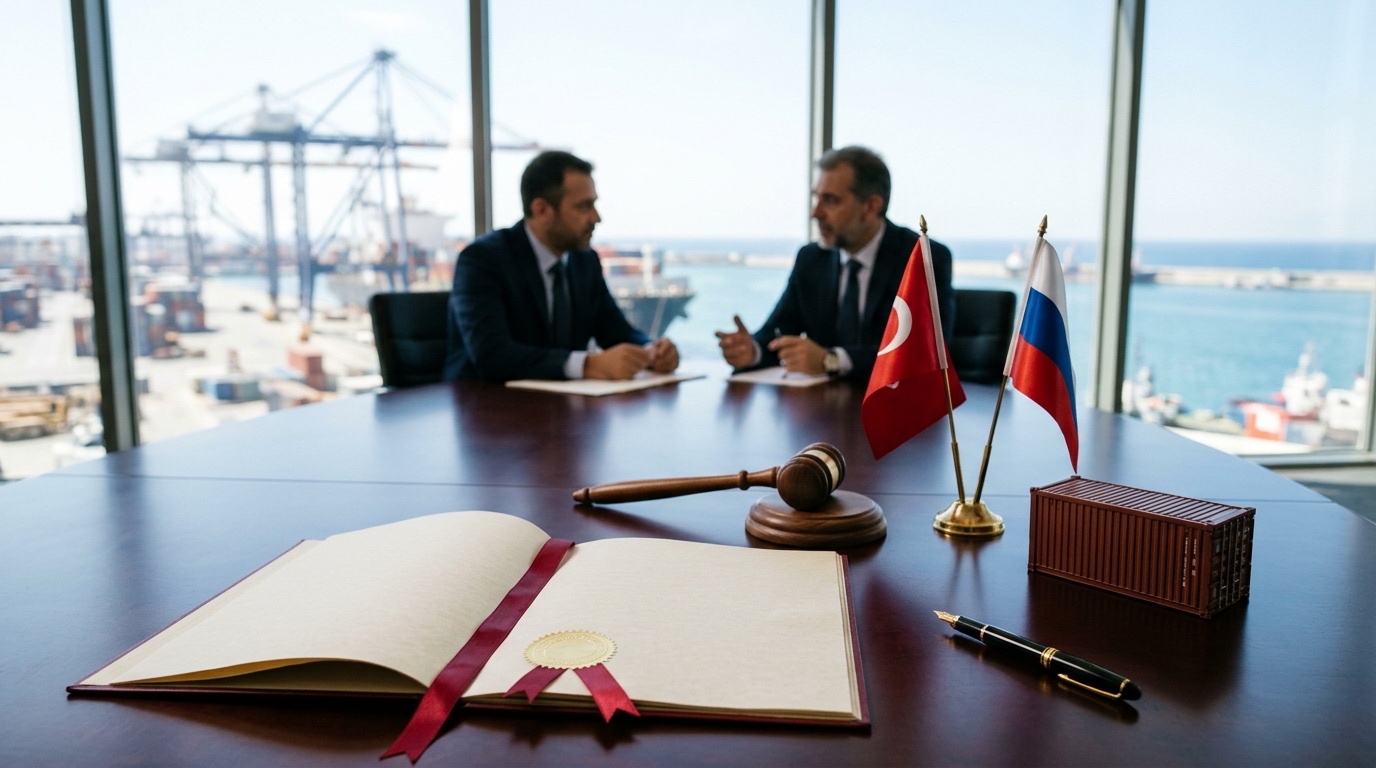
Arbitration Clauses and Dispute Resolution in Commercial Contracts Between Russia and Turkey: ISTAC, ICAC, and Enforcement Guide
Bilateral trade between the Republic of Turkey and the Russian Federation spans billions of dollars across international commodity sales, maritime shipping, agriculture and citrus exports, industrial machinery supply, energy, and turnkey construction contracts. Yet one of the most frequent and costly legal mistakes in cross-border contracts between Russian and Turkish companies is inserting boilerplate domestic court jurisdiction clauses or defective ("pathological") dispute resolution provisions into commercial agreements.
Because there is no active bilateral treaty in force between Turkey and the Russian Federation providing for the mutual recognition and enforcement of civil and commercial state court judgments, attempting to enforce a Turkish Commercial Court judgment in Russia—or a Russian state commercial court (Arbitrazh Court) judgment in Turkey under Articles 50–59 of the Turkish Private International and Procedural Law Act (PIL Act No. 5718)—routinely encounters severe obstacles over "de facto reciprocity" (fiili karşılıklılık) and takes years to litigate. By contrast, both Turkey and the Russian Federation are contracting states to the 1958 New York Convention on the Recognition and Enforcement of Foreign Arbitral Awards. Consequently, a properly drafted International Arbitration Clause ensures that the resulting arbitral award is directly enforceable against the debtor's assets in both jurisdictions without re-examination of the merits.
Executive Legal Summary (Key Takeaways):
- 1958 New York Convention Advantage (PIL Act Arts. 60–63): While state court judgments between Russia and Turkey face reciprocity barriers due to the lack of an active bilateral enforcement treaty, both nations are parties to the 1958 New York Convention. Therefore, international arbitral awards are directly recognized and enforced in both Turkey and Russia without review on the merits (révision au fond prohibition).
- Neutrality of ISTAC (Istanbul Arbitration Centre) Against Russian APC Art. 248.1 ("Lugovoy Law"): Selecting Western European arbitration institutions (ICC, LCIA, SCC) exposes contracts to Articles 248.1 and 248.2 of the Russian Arbitrazh Procedure Code (APC RF), which allow Russian parties to invalidate arbitration clauses located in sanctioning states and obtain anti-suit injunctions. Because Turkey is a neutral/non-sanctioning jurisdiction, ISTAC prevents APC Art. 248.1 jurisdictional evasion and enables seamless cross-border fee payments.
- Invalidity of Pathological Clauses (Law No. 4686 Art. 4 & Court of Cassation Precedents): Clauses that simultaneously grant jurisdiction to both arbitration and state courts (e.g., "Disputes shall be resolved by ISTAC arbitration or Istanbul/Moscow courts") are held null and void by the Turkish Court of Cassation 11th and 15th Civil Chambers for lacking unconditional arbitral intent.
- Mandatory Bilingual Drafting (Law No. 805) & Interim Attachments (Law No. 4686 Art. 6): To prevent challenges under Turkish Law No. 805 on the Mandatory Use of Turkish in Economic Enterprises, contracts involving a Turkish party signed or performed in Turkey should be executed in bilingual format (Turkish-Russian or Turkish-English); additionally, claimants can obtain provisional attachment (ihtiyati haciz) from Turkish courts prior to or during arbitration under Law No. 4686 Art. 6.
1. Why International Arbitration Instead of State Courts in Russia-Turkey Trade?
Pursuant to Article 54(a) of Turkish PIL Act No. 5718, enforcing a foreign state court judgment in Turkey requires statutory or de facto reciprocity, whereas under the 1958 New York Convention and PIL Act Articles 60–63, foreign arbitral awards are enforced directly without re-litigating the commercial dispute.
When a cross-border payment default, non-delivery, demurrage claim, or quality defect arises between a Russian and a Turkish company, the choice between state litigation and international arbitration determines whether a judgment is worth the paper it is written on:
- The Reciprocity Deadlock in State Court Judgments: Although Turkey and Russia signed a judicial assistance agreement in 1997, it never entered into force regarding mutual enforcement of civil/commercial judgments. Consequently, a Turkish exporter who wins a lawsuit before the Mersin or Istanbul Commercial Court cannot easily enforce that judgment against a debtor's bank accounts in Moscow; similarly, a Russian company holding a judgment from the Moscow Arbitrazh Court faces lengthy reciprocity challenges in Turkish courts under PIL Act Art. 54.
- Direct Cross-Border Enforcement Under the 1958 New York Convention: Both Turkey and the Russian Federation are parties to the 1958 New York Convention. Under Article V of the Convention and Article 62 of PIL Act No. 5718, the enforcing court in Turkey or Russia is strictly prohibited from reviewing the merits of the dispute (révision au fond prohibition) and may only refuse enforcement on narrow procedural or public policy grounds.
- Direct Execution of Turkish-Seated Awards (Law No. 4686 Art. 15/B): If the Seat of Arbitration (Tahkim Yeri) is designated as Turkey (e.g., Istanbul or Mersin under ISTAC rules), the arbitral award is treated as a domestic award in Turkey—meaning it can be enforced immediately through Turkish Enforcement Offices against the debtor's Turkish assets without even filing a recognition/enforcement lawsuit, while remaining enforceable in Russia under the New York Convention.
2. Statutory Framework of International Arbitration in Turkey (Law No. 4686)
Under Articles 1 and 2 of the Turkish International Arbitration Law (Law No. 4686, modeled on the UNCITRAL Model Law), any commercial arbitration seated in Turkey that involves a foreign element is governed by Law No. 4686.
A contract between a Turkish entity and a Russian entity (or a Free Zone company with foreign shareholding) automatically satisfies the statutory "foreign element" (yabancılık unsuru) under Law No. 4686 Art. 2:
- Party Autonomy (Law No. 4686 Arts. 7–8): The parties are free to choose the institutional arbitration rules, the number and qualifications of arbitrators, the language of proceedings (English, Russian, or Turkish), and the substantive law governing the contract (such as Turkish Law, Russian Law, or the 1980 UN Vienna Convention on Contracts for the International Sale of Goods — CISG, to which both Turkey and Russia are contracting states).
- Finality and Limited Setting-Aside Grounds (Law No. 4686 Art. 15): Arbitral awards rendered under Law No. 4686 are final and binding upon issuance. They are not subject to appellate review on the merits; an action to set aside (iptal davası) before the Regional Court of Appeal may only be brought within 30 days on exhaustive procedural grounds mirroring Article V of the New York Convention.
3. Selecting the Right Arbitration Institution: ISTAC, ICAC (MKAS), and the "Lugovoy Law" (APC RF Art. 248.1) Trap
Under Articles 248.1 and 248.2 of the Arbitrazh Procedure Code of the Russian Federation (APC RF — the "Lugovoy Law"), Russian courts assert exclusive jurisdiction and issue anti-suit injunctions against arbitration clauses seated in sanctioning Western states; therefore, selecting a neutral institution such as the Istanbul Arbitration Centre (ISTAC) is essential to preserve enforceability.
Following international financial sanctions, traditional European arbitration hubs have become legally hazardous for Russia-Turkey contracts:
- Why Western European Institutions (ICC Paris, LCIA London, SCC Stockholm) Are Risky: According to Decisions of the Supreme Court of the Russian Federation interpreting APC RF Art. 248.1, the mere existence of sanctions or cross-border SWIFT payment restrictions in the seat of arbitration (such as the UK, EU, or Switzerland) creates a presumption that the Russian party's access to justice is impaired. A Russian counterparty in breach of contract can petition a Russian state Arbitrazh Court under APC RF Art. 248.2 to invalidate an LCIA, SCC, or ICC arbitration clause, prohibit the Turkish party from continuing the arbitration under threat of heavy statutory penalties equal to the claim amount, and move the case into Russian state courts.
- The Strategic Advantage of ISTAC (Istanbul Arbitration Centre): Because the Republic of Turkey has not imposed unilateral sanctions on Russia and is classified as a neutral/friendly jurisdiction, Russian companies face no legal or banking prohibitions in paying ISTAC registration fees, retaining counsel in Turkey, or participating in hearings. Consequently, a Russian debtor cannot invoke APC RF Art. 248.1 to escape an ISTAC arbitration clause. Furthermore, ISTAC offers Fast-Track Arbitration (Seri Tahkim) resolving disputes within 3 months, competitive fee schedules, and full procedural support in English, Russian, and Turkish.
- ICAC at the Chamber of Commerce and Industry of the Russian Federation (МКАС при ТПП РФ): Russian state-affiliated or large corporate counterparties frequently propose ICAC (MKAS) seated in Moscow. While ICAC awards are enforceable in Turkey under the New York Convention, agreeing to a Moscow seat with Russian-only proceedings shifts significant procedural and travel costs onto the Turkish party unless balanced through a dual-seat or neutral language negotiation.
4. Comparison Table of Dispute Resolution Mechanisms in Russia-Turkey Contracts
| Dispute Resolution Mechanism (Legal Basis) | Enforceability in Turkey & Russia | Sanctions, Time & Cost Risk |
|---|---|---|
| ISTAC — Istanbul Arbitration Centre (Law 4686) | ✅ Direct execution in TR; NY Conv. in Russia | ✅ Immune to APC 248.1; fast 3-month option |
| ICAC / MKAS Moscow (1958 New York Conv.) | ✅ Enforceable in both via NY Convention | ⚠️ Higher Moscow defense cost for Turkish side |
| Western Hubs — LCIA, SCC, ICC (Sanction States) | ❌ High risk of APC RF Art. 248.1 invalidation | ❌ SWIFT fee blocks & anti-suit injunctions |
| Turkish or Russian State Courts (PIL Art. 50) | ❌ No bilateral treaty; reciprocity barrier | ❌ Multi-year enforcement deadlock abroad |
| Pathological Clause ("Arbitration or Court") | ❌ Void ab initio under Cassation case law | ❌ Years of jurisdictional dismissal & delay |
5. The 5 Mandatory Elements of a Valid Arbitration Clause and Avoiding "Pathological Clauses"
Pursuant to Article 4 of Law No. 4686 and settled precedents of the Turkish Court of Cassation (11th and 15th Civil Chambers), an arbitration clause is valid only if it expresses a clear, unconditional, and exclusive intent to submit disputes to arbitration to the exclusion of state courts.
Poorly drafted dispute resolution clauses—known in international practice as Pathological Arbitration Clauses—routinely destroy a claimant's ability to arbitrate:
Three Fatal Drafting Pitfalls to Avoid:
- Hybrid "Arbitration or State Court" Clauses: Clauses stating "Disputes shall be resolved by ISTAC arbitration or by the Istanbul/Mersin Commercial Courts" are consistently declared null and void by the Turkish Court of Cassation because the intent to arbitrate is not absolute and exclusive.
- Naming Non-Existent Institutions: Referring to ambiguous bodies such as "the International Commercial Arbitration Court of Mersin" or "the Moscow-Istanbul Arbitration Commission" renders the clause inoperable.
- Violating Law No. 805 on Mandatory Use of the Turkish Language: Under Articles 1 and 4 of Law No. 805 (dated 1926), Turkish companies must use the Turkish language in contracts executed or performed within Turkey. In several decisions, the Turkish Court of Cassation has refused to enforce arbitration clauses contained in contracts signed by a Turkish company exclusively in a foreign language (e.g., Russian-only or English-only). To eliminate any Law No. 805 defense, Russia-Turkey contracts should always be executed in dual-column bilingual format (Turkish-Russian or Turkish-English).
The 5 Essential Parameters of a Bulletproof Arbitration Clause:
- 1. Institutional Rules: Clear designation of the administering institution and its rules (e.g., Istanbul Arbitration Centre — ISTAC Arbitration Rules),
- 2. Seat (Legal Place) of Arbitration: The juridical seat governing procedural law and annulment jurisdiction (e.g., Istanbul, Turkey),
- 3. Number of Arbitrators: Specification of a sole arbitrator (for fast-track/medium claims) or a three-member tribunal,
- 4. Language of Arbitration: The procedural language (e.g., English, Turkish, or Russian),
- 5. Governing Substantive Law: Explicit choice of substantive law (e.g., Substantive Laws of the Republic of Turkey, including or excluding the 1980 UN CISG Convention).
6. Provisional Attachment (İhtiyati Haciz) During Arbitration and Award Enforcement
Pursuant to Article 6 of the Turkish International Arbitration Law (No. 4686), the existence of an arbitration agreement does not prevent a party from applying to Turkish state courts for provisional attachment (ihtiyati haciz) or interim injunctions (ihtiyati tedbir) before or during arbitral proceedings.
To prevent a defaulting counterparty from dissipating assets during arbitration, Turkish law provides powerful interim remedies:
- Pre-Arbitration Provisional Attachment (Law No. 4686 Art. 6 & EBL Art. 257): If a defaulting buyer, seller, or charterer has vessels calling at Turkish ports, cargo in customs warehouses, bank accounts in Turkey, or receivables from Turkish third parties, our attorneys petition the Turkish Commercial Court for an immediate Provisional Attachment Order (İhtiyati Haciz)—or apply to the ISTAC Emergency Arbitrator—to freeze those assets before the debtor is alerted, followed by commencing arbitration within the statutory deadline.
- Recognition and Enforcement of Foreign Arbitral Awards (PIL Act Arts. 60–63): Once a final arbitral award is obtained abroad (e.g., from ICAC Moscow or VIAC Vienna), an Enforcement Lawsuit (Tenfiz Davası) is filed before the competent Turkish Commercial Court of First Instance along with the apostilled/authenticated original award and arbitration agreement, sworn Turkish translations, and finality certificate.
7. Gönen Law Office 4-Stage International Contract & Arbitration Protocol
Our international commercial practice protects companies trading between Russia, the CIS region, and Turkey through a 4-stage legal protocol:
- Bilingual (TR/RU/EN) Contract Drafting & Arbitration Architecture: We draft and revise international sales (INCOTERMS 2020 & CISG), maritime charterparty, logistics, agency, and construction contracts in dual-column bilingual format compliant with Law No. 805, embedding sanction-proof ISTAC or balanced arbitration clauses.
- Pre-Arbitration Asset Tracing & Provisional Attachment (Law No. 4686 Art. 6): Upon counterparty default, we secure official evidence determination (delil tespiti) for defective goods/demurrage and obtain judicial provisional attachment orders over the debtor's bank accounts, vessels, or goods in Turkey.
- Representation Before ISTAC and International Arbitral Tribunals: We represent claimants and respondents throughout all stages of institutional arbitration—filing the Request for Arbitration, appointing specialized arbitrators, submitting pleadings in Turkish, English, and Russian, and conducting evidentiary hearings.
- Enforcement of Arbitral Awards (1958 New York Convention) & Debt Recovery: We prosecute enforcement lawsuits (tenfiz davası) for foreign arbitral awards before Turkish Commercial Courts under PIL Act Art. 60 and coordinate cross-border award enforcement in the Russian Federation through our regional legal network.
Local Expertise in Mersin International Port, Free Zone, and the Russia-Turkey Trade Corridor
Mersin serves as one of the primary maritime and logistics hubs for bilateral trade between Turkey, the Russian Federation, and the CIS region. Billions of dollars in agricultural produce (citrus and fresh food exports), grain and pulse imports, industrial machinery, and transit containerized cargo move annually through the Mersin International Port (MIP), the Mersin Free Zone (MESBAŞ), and exporters registered with the Mediterranean Exporters' Associations (AKİB). Resolving cross-border disputes over unpaid export invoices, customs quarantine rejections, vessel demurrage, and supply defaults requires both international arbitration mastery and immediate on-the-ground port/customs intervention.
At Gönen Law Office, our Mersin Commercial Law Lawyer, Mersin Corporate Law Lawyer, and Mersin Customs Law Lawyer teams draft enforceable bilingual commercial contracts, represent companies in ISTAC and international arbitration proceedings, and execute foreign arbitral awards in Turkish, Russian, and English.
This article is provided for general informational purposes only. Drafting an enforceable international arbitration clause, selecting an arbitration institution immune to sanctions-based jurisdictional challenges, and enforcing foreign arbitral awards require tailored legal analysis based on the location of the parties' assets and the nature of the commercial transaction. To safeguard your cross-border receivables, consult the international commercial attorneys at Gönen Law Office before executing contracts between Russia and Turkey.
Official Sources: Turkish International Arbitration Law No. 4686 · Turkish Private International and Procedural Law Act No. 5718 · Istanbul Arbitration Centre (ISTAC) Rules
Frequently Asked Questions
Why should commercial contracts between Russia and Turkey specify international arbitration instead of state courts?+
Because there is no active bilateral treaty in force between Turkey and the Russian Federation for the mutual enforcement of civil and commercial state court judgments, enforcing domestic court judgments across borders faces severe reciprocity hurdles under PIL Act Art. 54. Conversely, both countries are parties to the 1958 New York Convention, ensuring that international arbitral awards are directly enforceable in both Turkey and Russia without review of the merits.
Why is the Istanbul Arbitration Centre (ISTAC) safer than Western European arbitration hubs for Russia-Turkey contracts?+
When contracts designate institutions in sanctioning jurisdictions (such as LCIA London, SCC Stockholm, or ICC Paris), Russian counterparties frequently invoke Articles 248.1 and 248.2 of the Russian Arbitrazh Procedure Code ('Lugovoy Law') to invalidate the arbitration clause and obtain anti-suit injunctions due to SWIFT payment barriers. Because Turkey is a neutral non-sanctioning jurisdiction, ISTAC clauses remain enforceable and allow seamless fee payments in English, Russian, or Turkish.
Is a clause stating 'Disputes shall be resolved by arbitration or by state courts' valid under Turkish law?+
No. Under Article 4 of the Turkish International Arbitration Law (No. 4686) and established precedents of the Turkish Court of Cassation, an arbitration agreement must express an unconditional and exclusive intent to arbitrate. Hybrid or ambiguous clauses granting concurrent jurisdiction to both arbitration and state courts ('pathological clauses') are held null and void.
Av. Yavuz Gönen
Founding Partner & Attorney at Law (Mersin Bar Association)
Founding Partner at Gönen Law Office in Mersin. Primarily focuses on Real Estate & Construction Law (accompanying property sales, title deed due diligence, off-plan and preliminary sales contract review, delayed delivery compensation, and refund litigation), Turkish Citizenship by Investment, Residence & Foreigners Law, Foreign-Owned Company Formation & Corporate Law, Rental Law, and Criminal Law (P2P Crypto Fraud).